
Weight Watchers Scale Manual PDF: A Comprehensive Guide
Accessing detailed WW54C instructions, Argos 832/1846 guides, and crucial PDF manuals empowers users. These resources ensure accurate weight tracking and optimal scale performance.
Weight Watchers scales have long been a trusted tool for individuals pursuing health and wellness goals. These scales aren’t simply devices for displaying a number; they represent a commitment to mindful tracking and informed decision-making. Understanding how to properly utilize your Weight Watchers scale, however, is paramount to achieving accurate results and maximizing its benefits.
The availability of a comprehensive scale manual, often in PDF format, is crucial. These manuals provide detailed instructions on setup, calibration, interpreting display symbols, and troubleshooting common issues. Models like the WW54C and the Precision Body Weight Analysis Scale (Argos 832/1846) each have specific features and operational nuances detailed within their respective manuals.
Properly understanding your scale ensures you’re not misled by fluctuations or inaccurate readings. Whether you’re navigating units of measurement or learning about tare weight, the manual is your guide. It’s a resource that transforms a simple weighing experience into a valuable data point on your wellness journey.
Understanding the Importance of a Scale Manual
A Weight Watchers scale manual, particularly in PDF format, is far more than just an accessory; it’s the key to unlocking the full potential of your device. Without it, you risk inaccurate readings, improper usage, and ultimately, a skewed understanding of your progress. The manual provides essential guidance on initial configuration, battery replacement, and calibration – steps vital for consistent and reliable measurements.
Understanding display symbols, as outlined in the manual, prevents misinterpretation of data. Troubleshooting sections address common issues, saving you time and frustration. For specific models like the WW54C or Argos 832/1846, the manual details unique features and operational procedures.
Ignoring the manual can lead to confusion regarding gross vs. net weight, the role of tare weight, and even the scientific distinctions between mass and weight. It’s a foundational resource for accurate self-monitoring and achieving your wellness objectives.
Locating the Weight Watchers Scale Manual PDF
Finding the correct PDF manual for your Weight Watchers scale is often surprisingly straightforward. A primary resource is ManualsLib, which hosts the WW54C instructions for use manual and potentially others. Online searches using your specific scale model number – such as Argos 832/1846 – combined with “instruction manual PDF” will yield relevant results.
The official Weight Watchers (now WW) website may also offer downloadable manuals, though navigating their support section can sometimes be challenging. Retailer websites, like Argos, where you purchased the scale, frequently provide links to the corresponding PDF documentation.
If these methods fail, consider contacting WW customer support directly, providing your scale model for assistance. Remember to verify the manual’s authenticity and ensure it corresponds to your exact scale model to guarantee accurate instructions and troubleshooting guidance.
Common Weight Watchers Scale Models
Weight Watchers, now known as WW, has released several scale models over the years, each with varying features and functionalities. The WW54C is a frequently encountered model, often found with readily available instruction manuals online, including on platforms like ManualsLib. Another popular model is the Precision Body Weight Analysis Scale, frequently sold through retailers like Argos under product codes 832/1846.

Beyond these, numerous digital and analog scales have carried the Weight Watchers branding. Identifying the specific model number is crucial when searching for a corresponding PDF manual. Older models may require more diligent searching, potentially involving contacting WW customer support or exploring online forums dedicated to vintage scales.
Understanding your scale’s model number ensures you access the correct documentation for accurate setup, calibration, and troubleshooting.
WW54C Scale: Overview and Features
The Weight Watchers WW54C is a widely used bathroom scale known for its simplicity and reliability. Its core function is accurate body weight measurement, aiding users in their weight management journey. A key feature is its digital display, providing clear and easy-to-read weight readings in either pounds or kilograms – a setting easily adjusted according to user preference.
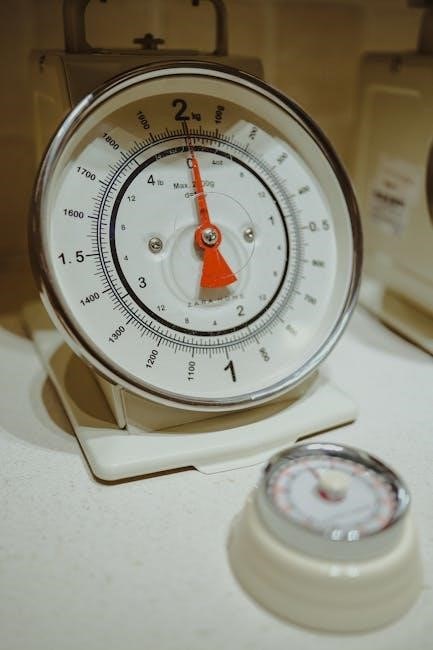
The WW54C often includes basic functionality like automatic power-off to conserve battery life and a tare function, allowing users to zero out the weight of containers for net weight measurements. Finding the WW54C instructions for use manual in PDF format is relatively straightforward, with resources available on ManualsLib and other document-sharing websites.
Proper use, guided by the manual, ensures accurate readings and extends the scale’s lifespan.
Precision Body Weight Analysis Scale (Argos 832/1846): Specifics
The Weight Watchers Precision Body Weight Analysis Scale, identified as Argos product 832/1846, offers a slightly more advanced feature set than basic models. While primarily a weight measurement tool, it aims for precision in tracking weight changes. Accessing the dedicated instruction manual in PDF format is crucial for optimal operation and understanding its specific capabilities.
This scale, like the WW54C, allows switching between pounds and kilograms. However, the Argos 832/1846 manual details specific steps for ensuring accurate readings, potentially including a recalibration process to compensate for variations in surface or battery levels. The manual also clarifies symbol meanings on the display, aiding in interpreting the scale’s output.
Product support resources are readily available alongside the PDF manual, assisting users with troubleshooting and maximizing the scale’s functionality.
Scale Setup and Initial Configuration

Proper scale setup is paramount for accurate weight measurements. Consulting the Weight Watchers scale manual PDF is the first step. Initial configuration typically involves inserting batteries (see the ‘Battery Installation’ section) and selecting your preferred unit of measurement – pounds or kilograms. The manual details this process, often involving pressing specific buttons on the scale.
Many models, including the WW54C and Argos 832/1846, benefit from a brief calibration period after initial setup or battery changes. This ensures the scale is correctly zeroed and provides consistent readings. The PDF manual will guide you through this calibration procedure, which may involve stepping on and off the scale a few times.
Ensure the scale is placed on a hard, level surface to avoid inaccurate results. Following these initial steps, as outlined in the manual, establishes a reliable foundation for weight tracking.
Battery Installation and Replacement
The Weight Watchers scale manual PDF provides specific instructions for battery installation and replacement, varying slightly by model (like the WW54C or Argos 832/1846). Generally, locate the battery compartment, usually on the back or underside of the scale. Open the compartment using a small screwdriver if necessary.
Insert batteries, paying close attention to the polarity (+ and -) markings inside the compartment. Incorrect battery insertion can damage the scale. Most scales require AAA or AA batteries. Once batteries are installed, close the compartment securely.
If the scale displays a low battery indicator, or readings become erratic, replace the batteries immediately. Always replace all batteries at the same time, even if only one appears depleted. Refer to your PDF manual for the exact battery type and quantity required. Proper battery maintenance ensures consistent and accurate weight measurements.
Units of Measurement: Switching Between Pounds and Kilograms
Your Weight Watchers scale manual PDF details how to toggle between pounds (lbs) and kilograms (kg). Typically, a button on the scale’s underside or side controls this function. The WW54C and Argos 832/1846 models usually feature a “Unit” or “Mode” button.
To switch, press and hold the designated button for a few seconds while the scale is off. Upon powering on, the display will show the selected unit. Some scales may require pressing the button repeatedly to cycle through available units. The PDF manual provides a visual guide to button locations and the switching process.
Ensure the correct unit is selected before each weigh-in for accurate tracking. Consistent use of the same unit is crucial for monitoring weight loss or gain. If you’re unsure, consult the manual for specific instructions related to your Weight Watchers scale model.
Calibration: Ensuring Accurate Readings
Your Weight Watchers scale manual PDF emphasizes the importance of calibration for precise measurements. Calibration adjusts the scale to account for variations in surface level and ensures accuracy. The WW54C and Argos 832/1846 models often require recalibration after battery changes, relocation, or if inaccurate readings are observed.
Typically, calibration involves applying a known weight – often a dumbbell or a calibrated weight – to the scale and following the instructions in the PDF manual. The scale will then adjust its internal settings to match the applied weight. Some scales feature an automatic calibration function, while others require manual input.
Regular calibration, as detailed in your manual, is vital for reliable weight tracking. If readings consistently seem off, even after calibration, consult the troubleshooting section of the Weight Watchers scale manual PDF or contact customer support.
Understanding Scale Display Symbols
The Weight Watchers scale manual PDF is crucial for deciphering the symbols displayed on your scale. These symbols provide vital information beyond just your weight. Common indicators include “LO” for low battery, prompting immediate replacement to maintain accuracy, as detailed in the manual.
Other symbols might signify overload (“Err” or similar), indicating you’ve exceeded the scale’s weight capacity. The WW54C and Argos 832/1846 models may also display symbols related to unit selection (kg/lbs) or calibration status. Understanding these is key to correct operation.
The PDF manual will specifically explain any unique symbols present on your particular model. Ignoring these symbols can lead to inaccurate readings or damage to the scale. Always refer to your Weight Watchers scale manual PDF for a comprehensive guide to all display indicators and their meanings.
Troubleshooting Common Scale Issues
The Weight Watchers scale manual PDF is your first resource when encountering problems. Common issues include inaccurate readings, often stemming from low batteries – the manual stresses timely replacement. If the display shows “Err” or a similar message, it likely indicates overload; remove weight immediately.
Fluctuating weight readings can be normal, but consistent discrepancies warrant investigation. The manual advises ensuring the scale is on a hard, level surface. For WW54C or Argos 832/1846 models, recalibration (as detailed in the PDF) might be necessary.
If the scale fails to power on, double-check battery installation. The manual provides diagrams for correct placement; Remember to consult the Weight Watchers scale manual PDF for model-specific troubleshooting steps and safety precautions before attempting any repairs.
Inaccurate Readings: Causes and Solutions
The Weight Watchers scale manual PDF highlights several causes for inaccurate readings. A primary culprit is an uneven surface; the manual emphasizes placement on a hard, level floor. Low batteries are another frequent issue – replace them as recommended in the PDF guide.
For models like the WW54C or Argos 832/1846, recalibration, detailed within the manual, is crucial. Slight weight fluctuations (under 0.5 kg/1.0 lbs) are considered normal, but significant deviations require attention. Ensure you’re not exceeding the scale’s weight capacity.
The manual also addresses the importance of ‘tare weight’ – correctly zeroing the scale before each use. Understanding the difference between gross and net weight, as explained in some PDF versions, can also prevent errors. If problems persist, consult the Weight Watchers scale manual PDF for advanced troubleshooting;
Weight Fluctuation: What’s Normal and What’s Not
The Weight Watchers scale manual PDF acknowledges that daily weight fluctuations are common. Minor variations – less than approximately 0.5 kg or 1.0 lbs – are often due to hydration levels, recent meals, or hormonal changes, as detailed in some manual versions.
However, the PDF guide stresses that significant or rapid weight gains or losses warrant investigation. These could indicate factors unrelated to fat gain or loss. Consistent fluctuations exceeding this range, despite stable habits, may suggest a scale malfunction, prompting recalibration as outlined in the WW54C or Argos 832/1846 manual.

The manual emphasizes consistent weighing conditions – same time of day, similar clothing – to minimize variability. Remember, weight is influenced by numerous factors; the Weight Watchers scale provides a snapshot, not a definitive judgment. Refer to the manual PDF for a comprehensive understanding.
The Role of Tare Weight in Accurate Measurement
The Weight Watchers scale manual PDF explains the concept of “tare weight” – the weight of a container or item not intended to be included in the final measurement. Understanding this is crucial for accurate readings, particularly when weighing items in dishes or using containers.
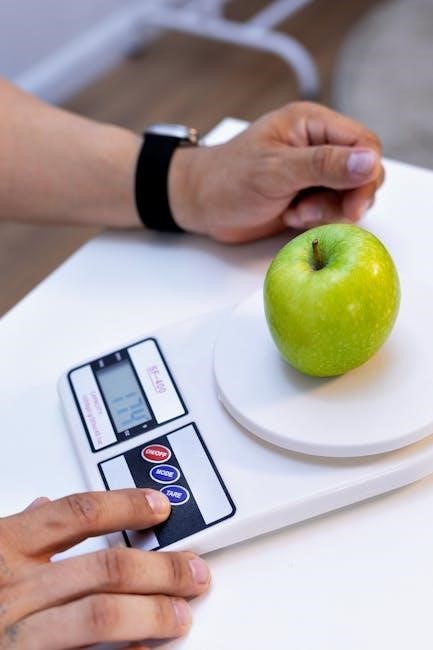
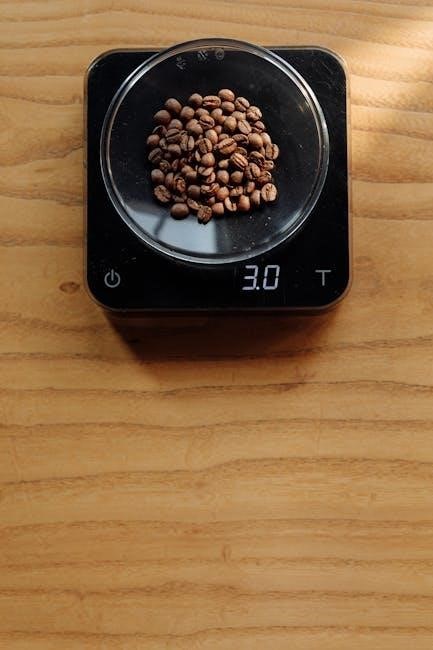
The manual details how to utilize the “tare” function on your WW54C or Argos 832/1846 scale. This effectively “zeros out” the weight of the container, allowing you to measure only the desired item’s weight. This feature is vital when tracking food portions, as highlighted in some PDF guides.
Without using the tare function, the scale displays the combined weight of the item and the container, leading to inaccurate tracking. The manual stresses that correctly applying tare weight ensures precise measurements, supporting effective weight management. Always consult your specific manual PDF for detailed instructions.

Understanding Gross Weight vs. Net Weight
The Weight Watchers scale manual PDF clarifies the distinction between gross weight and net weight, a concept vital for accurate tracking, especially when referencing shipping documentation like a “Weight List” or “Weight Note”. Gross weight encompasses the total weight – the item plus any packaging. Conversely, net weight represents solely the item’s weight, excluding packaging.
Your WW54C or Argos 832/1846 scale, as detailed in the manual PDF, typically measures gross weight initially. To obtain net weight for precise portion control, the tare function (zeroing out the container’s weight) must be employed. This ensures you’re recording only the food’s weight, not the dish’s.
The manual emphasizes that understanding this difference is crucial for aligning scale readings with nutritional information and weight management goals. Incorrectly interpreting these weights can lead to inaccurate tracking and potentially hinder progress. Always refer to your manual PDF for specific guidance.
Mass vs. Weight: A Scientific Distinction
The Weight Watchers scale manual PDF, while focused on practical use, implicitly deals with the scientific difference between mass and weight. Mass represents the amount of matter in an object – a fundamental property that remains constant. Weight, however, is the force exerted on that mass by gravity.

As explained in related physics resources referenced within the broader context of scale accuracy, Newton defined mass as the ratio of force to acceleration. Your WW54C or Argos 832/1846 scale measures weight, specifically the gravitational force acting upon you. This is why location impacts weight; gravity varies slightly.
The manual PDF doesn’t explicitly detail these physics concepts, but understanding them clarifies why readings might fluctuate. While mass remains constant, apparent weight changes; Accurate calibration, as detailed in the manual, ensures the scale correctly measures the local gravitational force, providing a reliable weight reading.
Gravity and its Impact on Weight Measurement
The Weight Watchers scale manual PDF doesn’t directly explain gravitational forces, but understanding them is crucial for interpreting readings accurately. Gravity, as described in physics resources alongside scale information, is the attractive force between objects with mass. On Earth, this force pulls everything downwards.
Your WW54C or Argos 832/1846 scale measures weight – the force of gravity acting on your mass. Because gravity isn’t uniform across the Earth, your weight will subtly vary depending on your location. This is why a properly calibrated scale, as detailed in the manual PDF, is essential.
The concept of “apparent weight” highlights gravity’s influence. Factors like altitude and even local geological variations affect gravitational pull. While these differences are usually minor for everyday use, they demonstrate that weight isn’t an inherent property but a measurement relative to gravitational force. The manual aims to minimize errors caused by these factors through calibration.
Apparent Weight: Factors Influencing Readings
The Weight Watchers scale manual PDF focuses on achieving accurate readings, but “apparent weight” explains why results can sometimes seem inconsistent. Apparent weight isn’t your true mass, but the force you feel due to gravity and other influences. Several factors, not detailed in the manual itself, can affect this.
As the WW54C or Argos 832/1846 scale measures force, any additional force acting on you alters the reading. This includes things like leaning against a wall, holding an object, or even the buoyancy of air. These external forces contribute to or subtract from your apparent weight.
Furthermore, acceleration impacts readings. If you’re standing on a scale in an elevator accelerating upwards, you’ll momentarily feel heavier. Conversely, downward acceleration makes you feel lighter. While these effects are minimal during typical weigh-ins, understanding them clarifies why slight fluctuations occur. The manual’s calibration instructions help mitigate some of these influences, ensuring a more consistent baseline.
Interpreting Body Weight Analysis Data
The Weight Watchers scale manual PDF, particularly for models like the WW54C and Argos 832/1846, often extends beyond simple weight readings. Many scales offer body composition analysis – estimating body fat percentage, muscle mass, and water weight. However, the manual emphasizes these are estimates, not precise medical measurements.
Understanding these metrics requires caution. Factors like hydration levels significantly impact readings; dehydration can falsely inflate body fat percentage. The manual likely advises consistent measurement conditions – same time of day, similar hydration – to minimize variability.
Focus on trends rather than single data points. A gradual decrease in body fat, consistently measured, is more meaningful than a daily fluctuation. Remember, the scale calculates these values using bioelectrical impedance analysis (BIA), which can be affected by individual physiology. The PDF guide stresses that these analyses are tools for tracking progress, not definitive health assessments.
Weight List/Weight Note: Shipping Weight Documentation
While seemingly unrelated to a Weight Watchers scale manual PDF, the concept of “Weight List” or “Weight Note” highlights the importance of accurate weight documentation. These documents, used in shipping and logistics, detail gross weight (G.W.) and net weight (N.W.). G.W; includes packaging, while N.W. is the product’s weight alone – a distinction mirroring the scale’s potential for tare weight functionality.
Understanding this difference is crucial. A Weight Watchers scale, when utilizing tare, effectively measures net weight by subtracting the container’s weight. The manual PDF doesn’t directly address shipping documentation, but the principle of isolating the desired weight is consistent.
Accurate weight is fundamental in both contexts. Just as shipping relies on precise G.W. and N.W. for cost calculation, successful weight management depends on the scale’s accurate measurement of your weight. The manual emphasizes calibration to ensure reliable readings, mirroring the need for verified weights in shipping.
Newton’s Laws and Weight Calculation
Although a Weight Watchers scale manual PDF doesn’t explicitly detail Newtonian physics, understanding these laws provides context for how scales function. Weight, as measured by the scale, isn’t inherent mass but the force of gravity acting upon that mass (W = m * g). Newton defined mass as the relationship between force and acceleration.
The scale measures this gravitational force – your apparent weight. Factors influencing this reading, discussed in the manual regarding accuracy, relate to these laws. Variations in local gravity, though minimal, impact weight. The PDF’s troubleshooting section addresses inaccurate readings, which can stem from improper calibration affecting the force measurement.
Furthermore, Newton’s laws explain why weight isn’t constant. Acceleration (like in an elevator) alters apparent weight. While a Weight Watchers scale doesn’t account for such dynamic forces, recognizing this principle clarifies the difference between mass – a constant property – and weight – a variable force.

Maintaining Your Weight Watchers Scale
Your Weight Watchers scale manual PDF emphasizes consistent care for accurate readings. Regularly clean the scale’s surface with a slightly damp cloth – avoid harsh chemicals. The manual advises against submerging the scale in water. Proper battery maintenance, detailed in the PDF, is crucial; replace batteries when the display becomes dim or erratic.
Store the scale on a hard, level surface to prevent damage and ensure stability. Avoid dropping or subjecting it to strong impacts. Periodically recalibrate the scale, as outlined in the manual, especially after battery changes or relocation. This ensures continued accuracy.
Refer to the PDF’s troubleshooting section for solutions to common issues. Following these simple maintenance steps, detailed within your Weight Watchers scale’s documentation, will prolong its lifespan and guarantee reliable weight measurements, supporting your wellness journey.
Safety Precautions and Warnings
The Weight Watchers scale manual PDF contains vital safety information. Always handle the scale with care, avoiding drops or impacts that could cause damage. Do not disassemble the scale; this voids the warranty and presents potential hazards. The manual explicitly warns against using the scale near water sources.
Ensure the scale surface is dry before stepping on it to prevent slips and falls. The PDF advises individuals with pacemakers or other implanted medical devices to consult their physician before using the scale, particularly models with body analysis features. Keep the scale out of reach of children.
Never exceed the scale’s maximum weight capacity, as specified in the manual. Discard used batteries responsibly, following local regulations. Refer to the Weight Watchers documentation for complete safety guidelines, ensuring safe and reliable operation.
Where to Find Additional Support and Resources
Beyond the Weight Watchers scale manual PDF, several avenues offer support. ManualsLib hosts downloadable WW54C instructions and other model guides. Product support for the Argos 832/1846 Precision Body Weight Analysis Scale is readily available through Argos’s customer service channels.
The official Weight Watchers website provides FAQs, troubleshooting tips, and contact information for their support team. Online forums and communities dedicated to Weight Watchers often feature discussions about scale issues and solutions. Searching online using specific model numbers (like WW54C) can yield helpful results.
Review sites and YouTube tutorials may offer visual guidance on setup and calibration. Remember to always verify information from unofficial sources against the official PDF manual. For complex issues, contacting Weight Watchers directly or a qualified technician is recommended.